

Acoustic guitars are the perfect tool for songwriting and impromptu performances, and the best examples have a vibrancy and complexity of tone that can be matched by few other instruments. While the majority of acoustic guitars are built in factories, there are luthiers (guitar makers) in nearly every nation. If you get a chance to try a hand made guitar, you’ll notice it has an extra richness of tone that you won’t find in many factory made guitars. The attention and detail that goes into such instruments comes at a price, but if you decide to invest in one, it will give you a lifetime of superb service.
Construction.
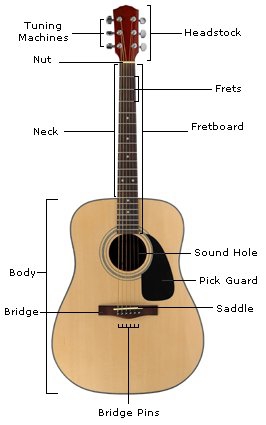
The body of an acoustic guitar is essentially a hollow box. The top or soundboard is made of strong light wood, typically Sitka spruce for steel-string acoustic guitars. Its job is to resonate freely and generate sound. the back of the guitar and it’s curved sides have a different job to do. Instead of being light and flexible, they must provide structural strength and reflect sound outward towards the listener. For this reason, they are made of strong dense hardwood such as rosewood or mahogany. The guitar’s neck is usually attached to the body with a glued dovetail joint, although some makers prefer a bolt-on design. The necks of nearly all modern acoustic guitars contain a slender adjustable metal rod known as a truss rod. It’s used to induce a slight bow shape in the neck that makes playing easier.
Sounding out.
When an acoustic guitar is strummed, the vibration of the strings is transmitted from the bridge into the soundboard. The broad flexible surface of the soundboard vibrates in sympathy with the strings and sets the air around the guitar into motion, generating sound. the other parts of the guitar’s box-like body also help to project the sound. For this reason, an acoustic guitar produces a louder sound than an unplugged electric guitar ( which has a solid body and requires amplification).
 The guitar journey.